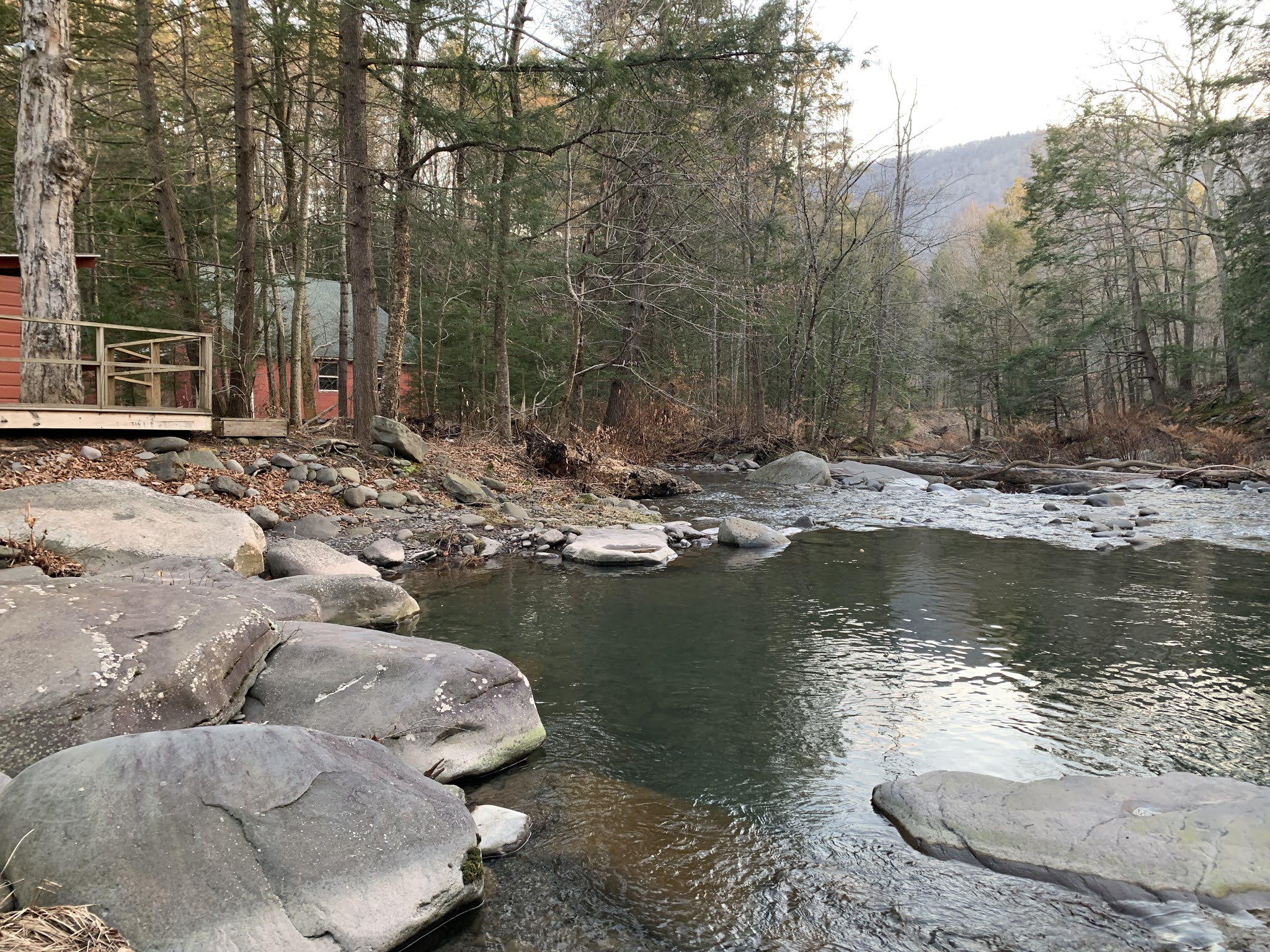
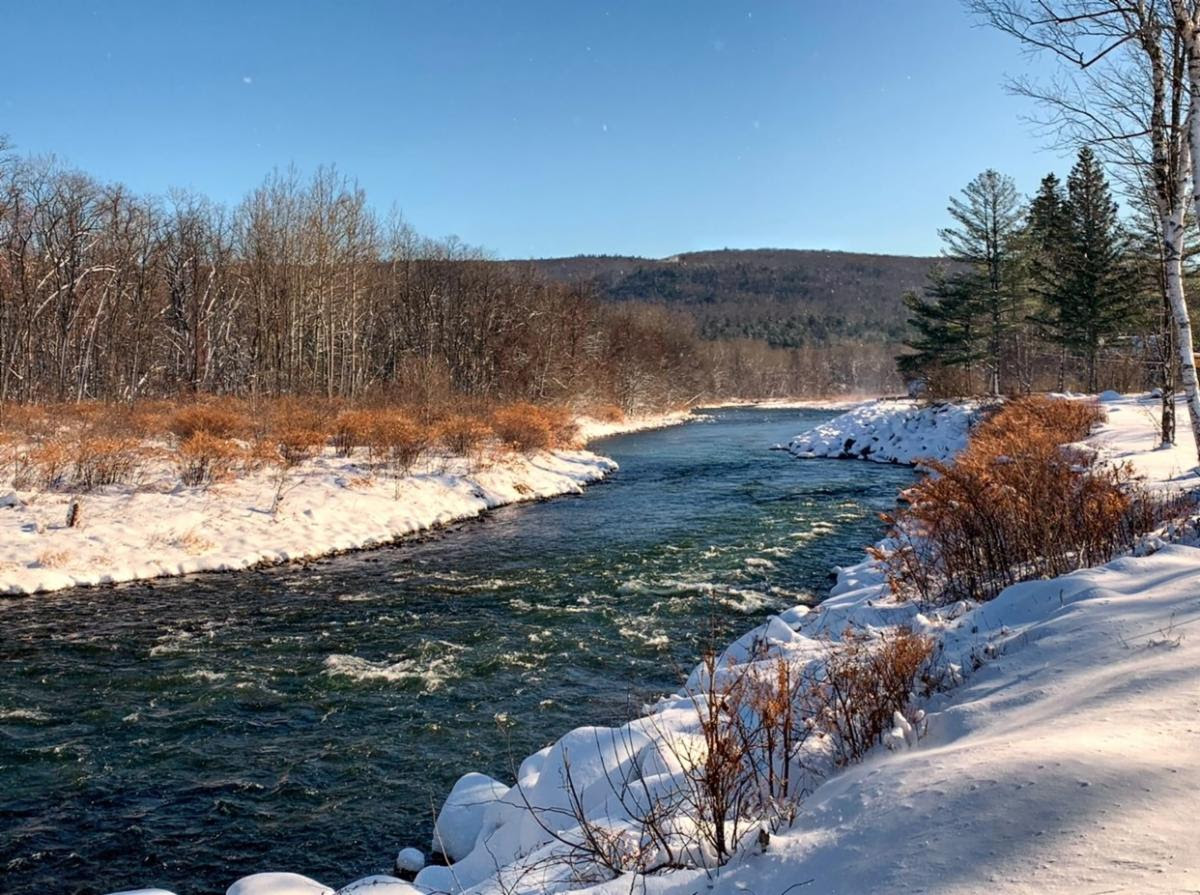
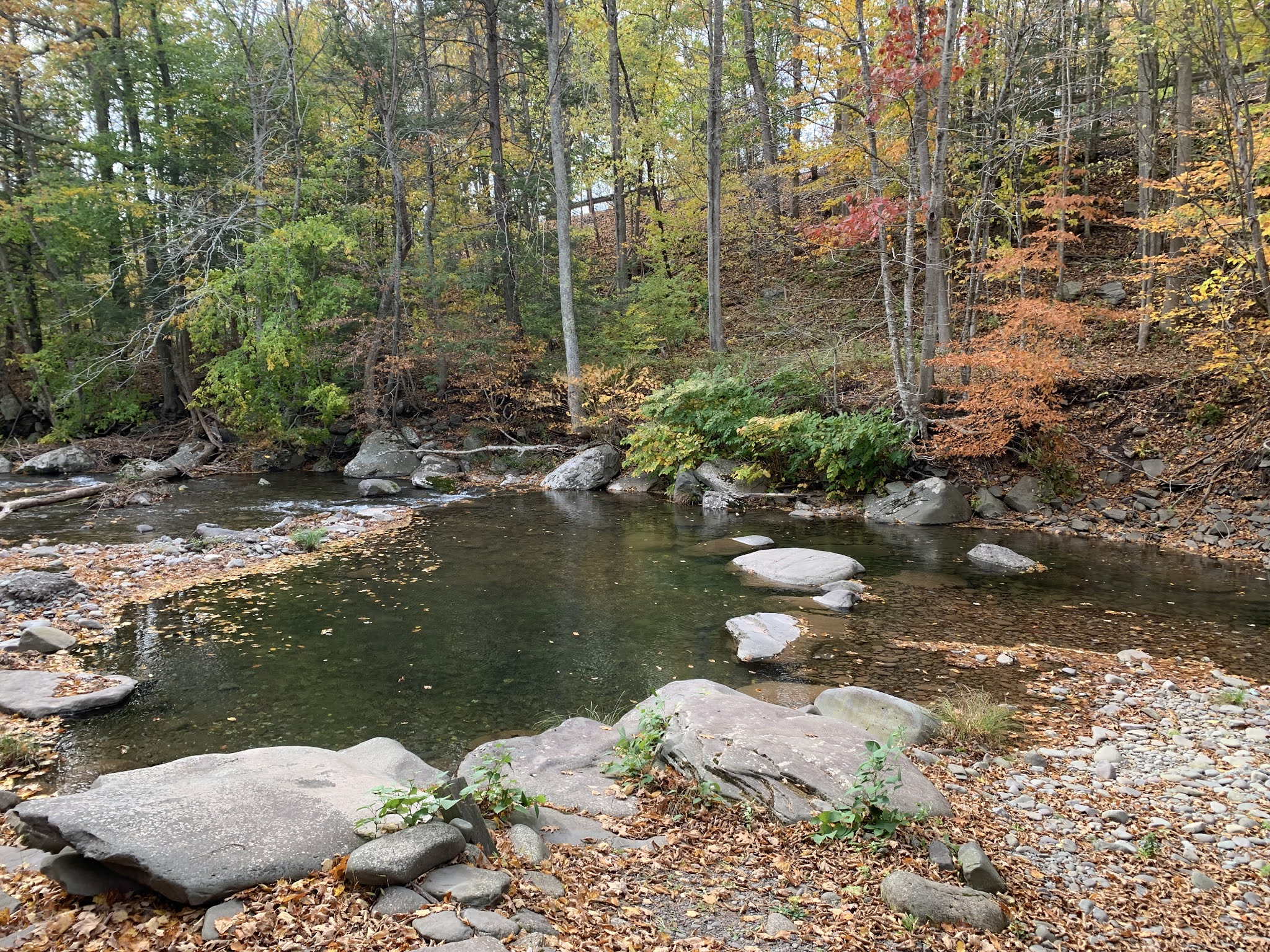
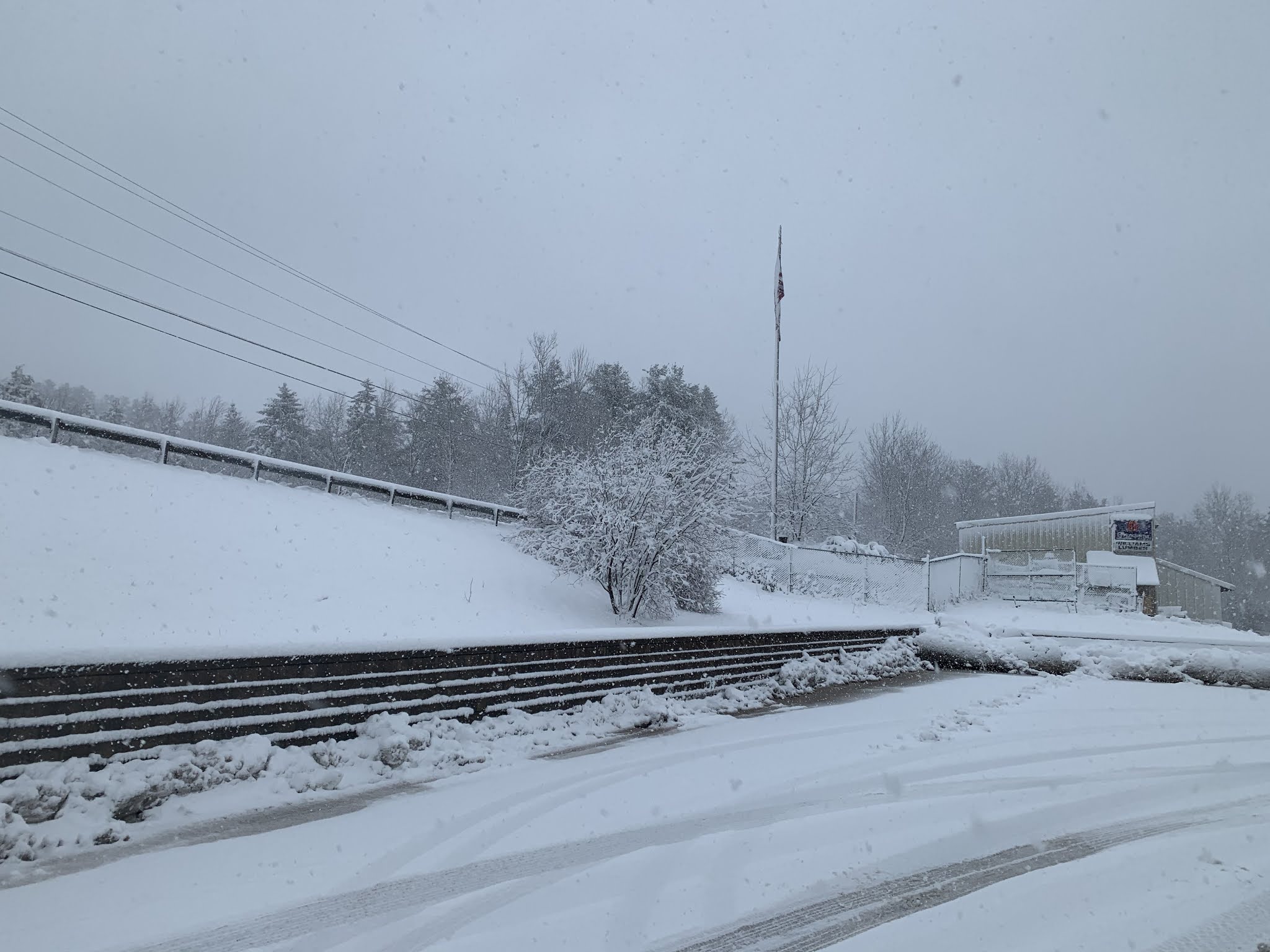
A very mild day in mid-December.
Friday, December 11, 2020
Wednesday, December 9, 2020
Brewery in Hudson Valley 'Has Some of the Best Eats' in New York
An article from The Hudson Valley Post:
Labels:
Food,
New York State,
Phoenicia,
Shandaken
Sunday, October 18, 2020
Thursday, September 10, 2020
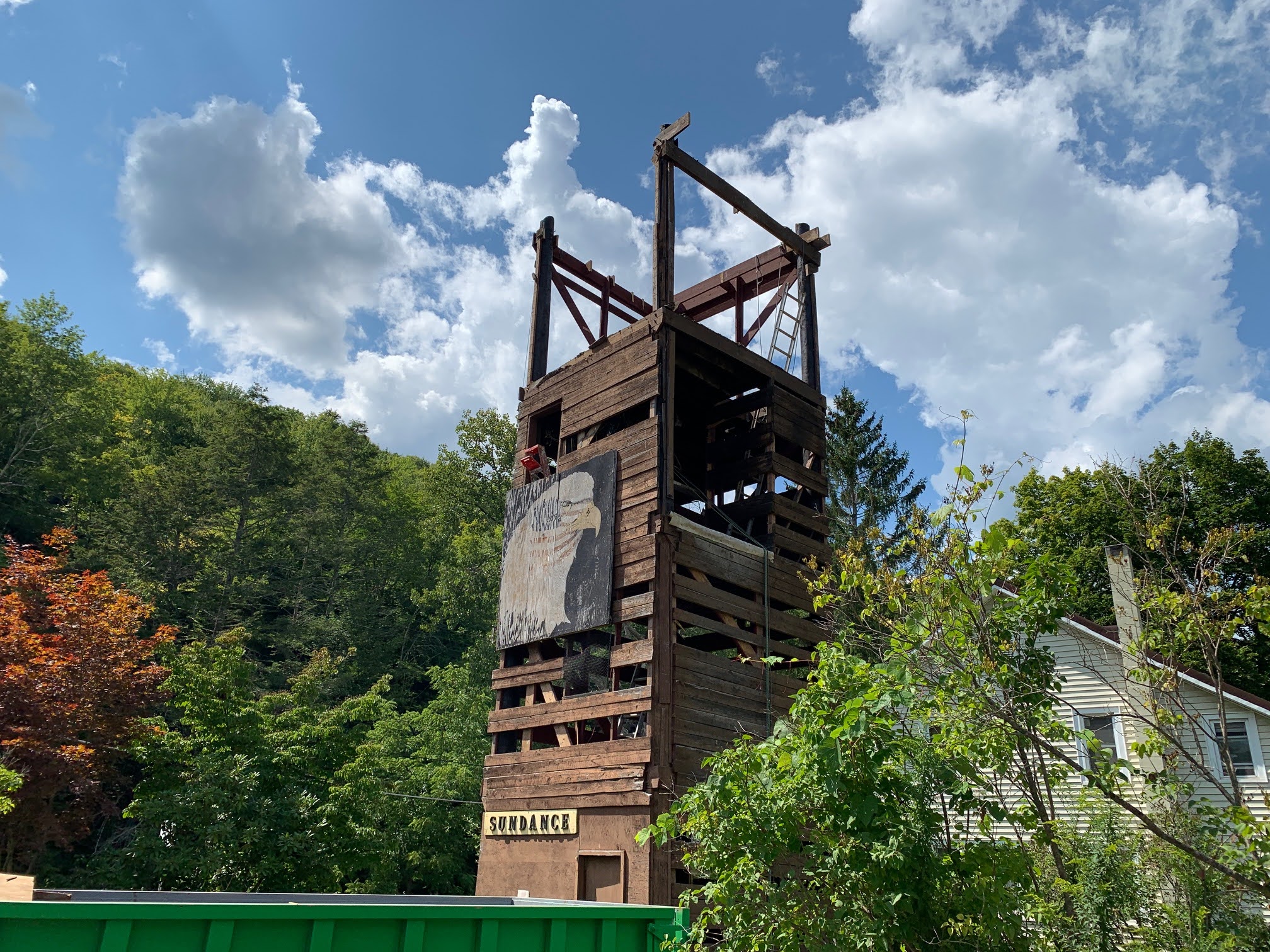
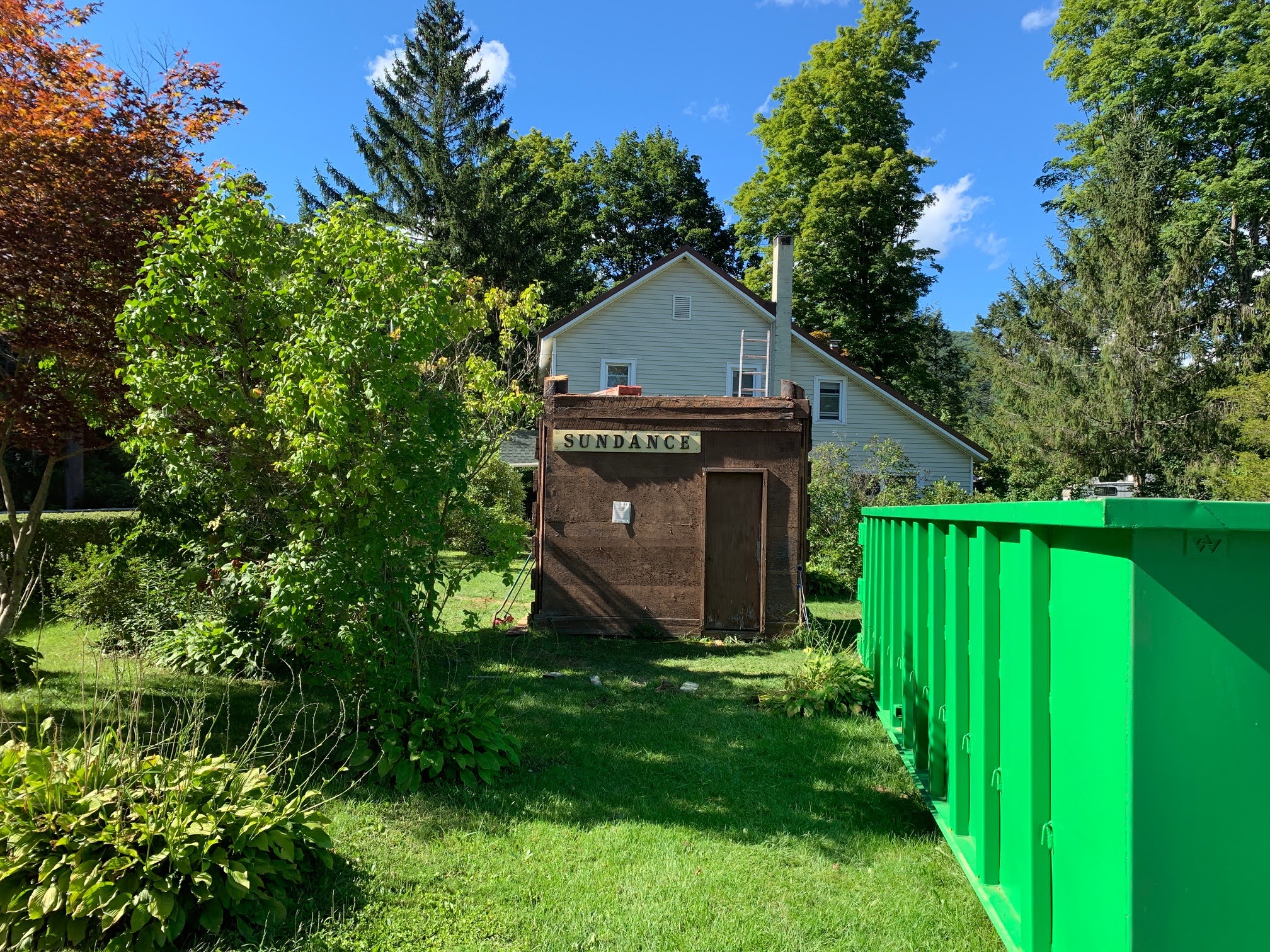
Rappel tower on 214 comes down
Daily Freeman story, from 20 August 2020:
John Valek, a roofer out of Phoenicia, N.Y., continues his work at dismantling the rappel tower at the corner of Mount Tremper Avenue and Route 214 in Phoenicia, on Thursday, Aug. 20, 2020. The tower, which is owned by local Shandaken judge Tom Crucet, was operated by Crucet since 1985 when he built it. Since then it has been used for military training, scouts and other groups for outdoor recreation. At 75, Crucet decided to stop using the tower and dismantle it for safety. Some of the boards will be repurposed in a barn.
8/22/2020:
9/4/2020:
All photos: SW
Monday, August 3, 2020
Sunday, July 5, 2020
Opening Day
A very nice crowd partook of a get-together in our CPOA community grounds. Plenty of space for social distancing, everyone masked, much gorgeous weather under a glorious July Catskills sun. A wonderful afternoon.
Friday, July 3, 2020
Thursday, June 11, 2020
Tuesday, March 24, 2020
Tuesday, February 25, 2020
Thursday, January 2, 2020
Sunday, November 24, 2019
Sunday, July 21, 2019
July party
Rains came on the 6th, then stopped long enough for us to have a nice party, with fireworks and the end.
Our swimming hole looks great:
Labels:
Chichester,
CPOA,
Fireworks,
July 4
Saturday, June 29, 2019
A few volunteers
Our CPOA grounds needed some TLC, and a few of us got to it.
Our new Adirondack chairs looked very nice:
There was, of course, a reward for hours of toil:
Our new Adirondack chairs looked very nice:
There was, of course, a reward for hours of toil:
Tuesday, June 11, 2019
Thursday, May 9, 2019
Japanese knotweed
It's everywhere, and keeps on growing. Tried to pull it out by its roots numerous times, but it is difficult. Also turns out to be pointless:
Oh, no, not knotweed Slate Science article dated 8 May 2019, by Henry Grabbar.
It’s been nearly four years since I bought hypodermic needles at a CVS, squatted in my backyard, and drew them full of glyphosate. I’d done my best to build a little garden in Brooklyn, only to see the ground begin to vanish beneath the fastest-growing plant I had ever seen. It sprouted in April with a pair of tiny, beet-red leaves between the flagstones, and poked up like asparagus through the mulch. By May the leaves were flat and green and bigger than my hands, and the stems as round as a silver dollar. My neighbor’s yard provided a preview of what was coming my way: a grove as thick as a cornfield, 10 feet high, from the windows to the lot line. I had to kill the knotweed. I tried a few different approaches: Yanking it out stalk by stalk was a sweaty, summer-long game of whack-a-mole—a thankless full-time job. Then a friend and I spent one long night digging a 10-by-4-foot trench, lining it with black contractor bags, and refilling it with dirt. It looked like we were trying to bury something, and in a way we were: the knotweed rhizomes—the plant’s creeping rootstalks—under our feet, searching for a ray of light.
I've been there, tried that.
Anyway, it didn’t work. Japanese knotweed has come a long way since Philipp Franz von Siebold, the doctor-in-residence for the Dutch at Nagasaki, brought it to the Utrecht plant fair in the Netherlands in the 1840s. The gold-medal shrub was prized for its “gracious flowers” and advertised as ornament, medicine, wind shelter, soil retainer, dune stabilizer, cattle feed, and insect pollinator. The stems could be dried to make matchsticks, or cut and cooked like rhubarb. It crested in the dog days of summer with tassels of tiny white buds. Oh, and it grew with “great vigor.”
Amen. Turns out even academic articles about that scourge have been published; to wit:
Optimising physiochemical control of invasive Japanese knotweed
Read at your own risk; bottom line: good luck.
How about this approach? Read it if you dare.
Potential of wild growing Japanese kntoweed (REYNOUTRIA JAPONICA) for briquette production
Oh, no, not knotweed Slate Science article dated 8 May 2019, by Henry Grabbar.
It’s been nearly four years since I bought hypodermic needles at a CVS, squatted in my backyard, and drew them full of glyphosate. I’d done my best to build a little garden in Brooklyn, only to see the ground begin to vanish beneath the fastest-growing plant I had ever seen. It sprouted in April with a pair of tiny, beet-red leaves between the flagstones, and poked up like asparagus through the mulch. By May the leaves were flat and green and bigger than my hands, and the stems as round as a silver dollar. My neighbor’s yard provided a preview of what was coming my way: a grove as thick as a cornfield, 10 feet high, from the windows to the lot line. I had to kill the knotweed. I tried a few different approaches: Yanking it out stalk by stalk was a sweaty, summer-long game of whack-a-mole—a thankless full-time job. Then a friend and I spent one long night digging a 10-by-4-foot trench, lining it with black contractor bags, and refilling it with dirt. It looked like we were trying to bury something, and in a way we were: the knotweed rhizomes—the plant’s creeping rootstalks—under our feet, searching for a ray of light.
I've been there, tried that.
Anyway, it didn’t work. Japanese knotweed has come a long way since Philipp Franz von Siebold, the doctor-in-residence for the Dutch at Nagasaki, brought it to the Utrecht plant fair in the Netherlands in the 1840s. The gold-medal shrub was prized for its “gracious flowers” and advertised as ornament, medicine, wind shelter, soil retainer, dune stabilizer, cattle feed, and insect pollinator. The stems could be dried to make matchsticks, or cut and cooked like rhubarb. It crested in the dog days of summer with tassels of tiny white buds. Oh, and it grew with “great vigor.”
Amen. Turns out even academic articles about that scourge have been published; to wit:
Optimising physiochemical control of invasive Japanese knotweed
Read at your own risk; bottom line: good luck.
How about this approach? Read it if you dare.
Potential of wild growing Japanese kntoweed (REYNOUTRIA JAPONICA) for briquette production
Sunday, May 5, 2019
Phoenicia Eagle
Visiting Phoenicia, on an early May day. This eagle had once stood outside Grand Central Station in Manhattan.
Monday, August 13, 2018
The Tell
On Sunday afternoon, 12 August 2018, Linda I. Meyers read from her published memoir, The Tell. The reading took place on the second floor of The Golden Notebook (9 Tinker St, Woodstock, NY 12498).
In the audience were many fellow CPOA members and neighbors. A fascinating story told with verve and elan, and quite a sense of humor.
Linda I. Meyers was 28 and the mother of three young boys when her mother, after a lifetime of threats, took her own life. Staggered by conflicting feelings of relief and remorse, Meyers believed that the best way to give meaning to her mother’s death was to make changes to her own life. Bolstered by the women’s movement of the ‘70s, she left her marriage, went to college and received her Psy.D., raised a family, and established a fulfilling career.
Written with irony and humor and sprinkled with Yiddish, “The Tell” is one woman’s inspirational story of before and after, and ultimately of emancipation and purpose. With stories ranging from witty to heartbreaking, “The Tell” showcases Meyers’ talent as a gifted storyteller. She chronicles her experience coming of age in a dysfunctional Jewish family during the ‘40s and ‘50s, her summer romance with a boy who grew up to be fashion designer Ralph Lauren, the rise of feminism, and running a family acting business that led to her son landing a memorable role as young Alvy Singer in Woody Allen’s Academy Award-winning movie “Annie Hall.”
Monday, August 6, 2018
Rain, rain, rain
Everyone knows it rains in the Catskills; a lot. And there is no such thing as climate change, right? (ahem). But it has been raining A LOT this summer.
July 29:
August 3:
August 6:
What is the outlook? Oh, no! Thusderstorms.
July 29:
August 3:
August 6:
What is the outlook? Oh, no! Thusderstorms.
Saturday, August 4, 2018
Kayaking the Stoney Clove Creek
That much rain fell; the Creek had rapids and some whitewater. Three adventurers took the chance to shoot the rapids in Chichester. Amy Lerner took this picture:
Wednesday, August 1, 2018
No water shortage here, thanks to an atmospheric river
From a story dated 24 July 2018 found on the website NewYorkUpstate.com:


Almost 7 inches of rain fell Monday in the Catskills as a rainy week kicked off in Upstate New York.
A weather observer in Phoenicia, in Ulster County, measured 6.68 inches of rain, according to National Weather Service reports. That was the highest of more than 200 Upstate locations reported to the weather service.
More than 5 inches fell in neighboring Greene County as thunderstorms dumped torrential rain Monday. Farther to the north, Albany and Fulton counties had reports of more than 4 inches.
The "atmospheric river" of Atlantic Ocean moisture was funneled through eastern New York and parts of the Southern Tier Monday. Much of Western New York and the North County got a half-inch or less.
Shandaken seeks NY state grant for Phoenicia Water District
Story from the Daily Freeman 31 July 2018:
The town is seeking a $750,000 grant from the state Office of Community Renewal to address longstanding problems that have prevented the Phoenicia Water District from working efficiently.
The application was submitted last week.
“We’ve run into some issues during the environmental review,” Shandaken Supervisor Robert Stanley said. “Doing an archeological survey, we found some bedrock, which may need to be blasted. We also ran into some issues with the water line crossing the Woodland Valley bridge, so we had to retract the previous grant and close that one out.”
The additional work has resulted in the town seeking nearly $300,000 more than the amount of a grant awarded nearly three years ago.
The town is seeking a $750,000 grant from the state Office of Community Renewal to address longstanding problems that have prevented the Phoenicia Water District from working efficiently.
The application was submitted last week.
“We’ve run into some issues during the environmental review,” Shandaken Supervisor Robert Stanley said. “Doing an archeological survey, we found some bedrock, which may need to be blasted. We also ran into some issues with the water line crossing the Woodland Valley bridge, so we had to retract the previous grant and close that one out.”
The additional work has resulted in the town seeking nearly $300,000 more than the amount of a grant awarded nearly three years ago.
Labels:
Catskill Watershed,
Government,
Phoenicia,
Shandaken
Friday, July 27, 2018
Rusticalia
I didn't even know it was a word. That's a beautiful feature of our English language — especially the American vintage, I'd say: the invention of words. Some of those words still give me trouble (thru instead of through just does not work for me, although it is easier to figure out how to pronounce). But, there it is: rusticalia.
I found rusticalia in a story in Chronogram about funky clothing stores in the Hudson Valley: Vintage Clothing Stores in the Hudson Valley Your Guide to Rockin' Retro Threads Upstate.
Mystery Spot Antiques: 72 Main Street, Phoenicia, NY 12464.
Its Instagram page describes it as: The Catskills' shrine to clutter. Seven rms packed w/ vintage clothing, vinyl, oddities & Rusticalia.
I found rusticalia in a story in Chronogram about funky clothing stores in the Hudson Valley: Vintage Clothing Stores in the Hudson Valley Your Guide to Rockin' Retro Threads Upstate.
Mystery Spot Antiques: 72 Main Street, Phoenicia, NY 12464.
Its Instagram page describes it as: The Catskills' shrine to clutter. Seven rms packed w/ vintage clothing, vinyl, oddities & Rusticalia.
Subscribe to:
Posts (Atom)